Morgan Griffin · 2 September 2026
Indigenous communities across the Pacific Northwest are actively restoring networks of ancient trails once used for trade, migration, and cultural exchange. These pathways, maintained for centuries by tribes including the Yakama, Nez Perce, and Coast Salish, connected villages, fishing grounds, and seasonal gathering sites. Recent projects emphasize both physical reconstruction and the preservation of oral histories embedded in the routes.
Roots in Indigenous Heritage
Archaeological evidence shows these trails formed intricate systems resembling woven patterns across the landscape. Travelers carried goods such as dried salmon, obsidian tools, and woven baskets, exchanging stories that reinforced tribal alliances. Elders describe the paths as living narratives, where each bend or marker held lessons about ecology, spirituality, and survival. Restoration teams consult these accounts to identify original alignments buried under modern development or overgrown vegetation.
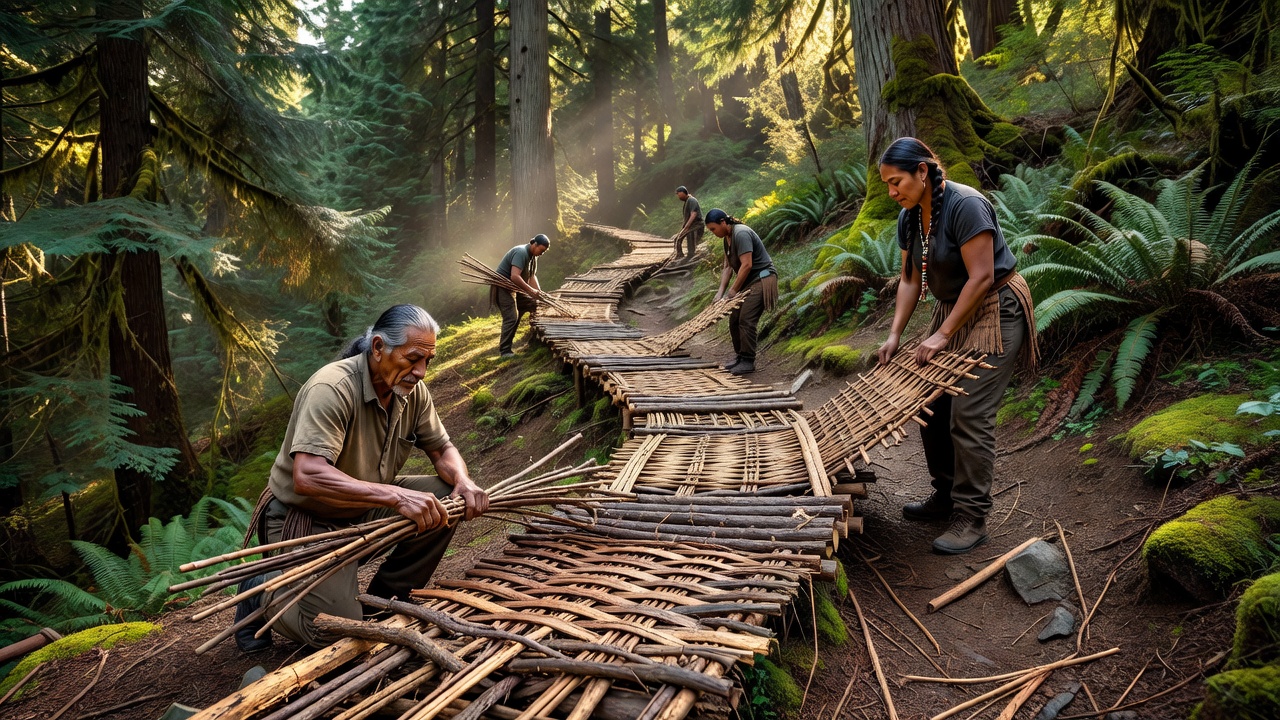
Collaborations with federal agencies have secured funding for mapping and clearing segments in Washington and Oregon national forests. Volunteers use traditional techniques like selective pruning and stone reinforcement to minimize environmental impact. Youth programs integrate trail work with language classes, ensuring younger generations learn the names and meanings of landmarks passed down through generations.
Contemporary Restoration Projects
Current initiatives focus on reconnecting fragmented sections near the Columbia River Gorge and Olympic Peninsula. Biologists monitor wildlife corridors along the restored paths, noting increased elk and salmon migration. Cultural monitors document petroglyphs and medicinal plant sites uncovered during clearing, adding layers to the historical record. Partnerships with universities provide GIS technology to overlay old maps with satellite imagery, guiding precise reconstruction.
Community events celebrate completed segments with storytelling gatherings and traditional feasts. Participants report renewed connections to ancestral knowledge, describing the work as weaving together past and present. Long-term plans include expanding access for educational tourism while protecting sacred areas from overuse. These efforts demonstrate how physical trails continue to shape collective identity and environmental stewardship in the region.